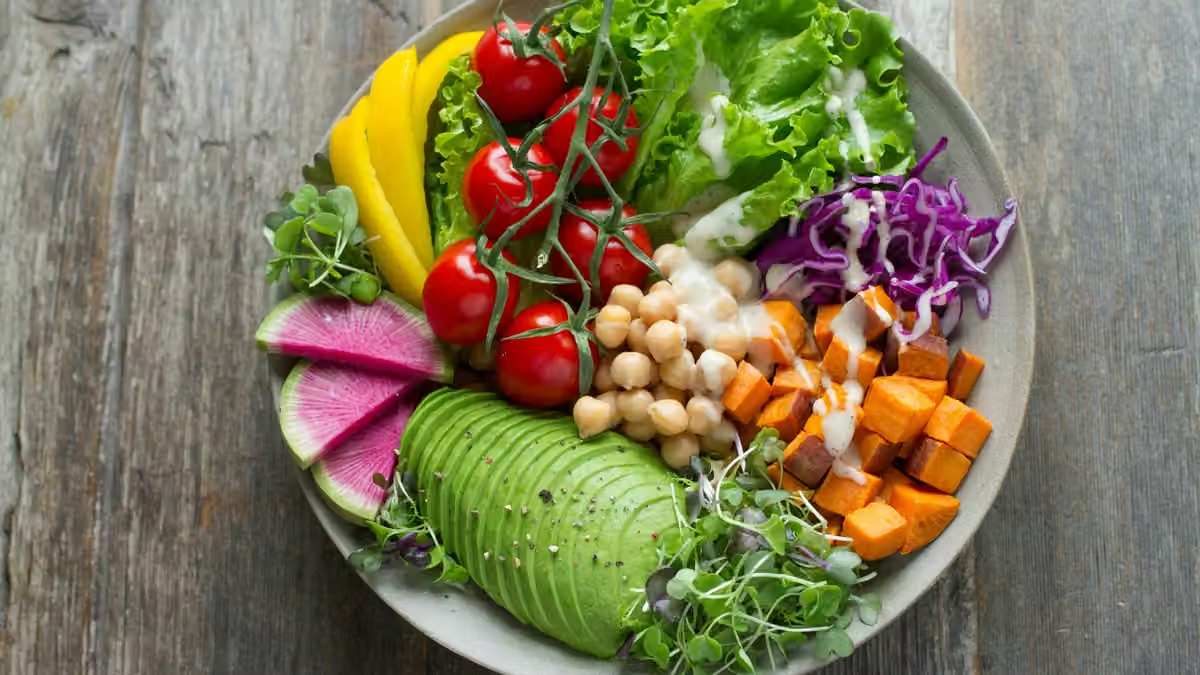
I keep coming back to the plain answer. Eat whole foods like fruits, vegetables, and lean proteins. That is the clearest place to start when the question is, “what do I eat?”
Whole foods are foods that stay close to their natural form. Fruit, vegetables, beans, eggs, fish, poultry, nuts, and seeds fit that idea well. These foods also tend to bring fiber, protein, vitamins, and minerals without a lot of extra sugar, salt, or added fat.
That simple list does a lot of heavy lifting. Fruits and vegetables add color, fiber, and volume to meals, which can help food feel more filling. Lean proteins help a meal feel complete. They also make it easier to build a plate without turning dinner into a math problem.
I like how ordinary this sounds. There is no mystery here. A meal does not need to be fancy to make sense. It just needs a few real foods on the plate. A bowl of berries. A salad with chicken. Eggs with vegetables. Beans in soup. These are all plain, steady choices.
The part that matters most
The biggest fact is that whole foods are usually less processed than packaged foods with long labels. That matters because less processing often means fewer extras you did not ask for. It does not make every packaged food bad. It just means the food is easier to recognize when the ingredient list looks more like food than a chemistry set.
Another useful point is that protein is not only for bodybuilders and gym people in bright shoes. It is part of everyday eating. Lean proteins can come from chicken, turkey, fish, eggs, beans, lentils, tofu, and other simple foods. I like that the list is broad. It gives room for taste, budget, and habit.
Fruits and vegetables matter for the same practical reason. They are simple to add. They do not need a perfect recipe. They can be fresh, frozen, canned, or cooked. That makes them less fragile than a lot of food rules people try and then abandon by Thursday.
I also think this is where many people breathe a little easier. “Eat better” can sound vague. “Eat whole foods like fruits, vegetables, and lean proteins” is much clearer. It gives a direction without turning dinner into a test.
What this does not mean
This does not mean every meal has to look the same. It does not mean you must avoid all other foods forever. It does not mean one food choice tells the whole story of health. Food is messier than that, and real life is messier too.
There is also one honest limit. Nutrition science keeps refining the details, and people do not all respond the same way to the same foods. So the broad idea is strong, but the exact best mix is not identical for every person, every day, or every budget. That is not a failure. It is just how food works.
I think that uncertainty is worth saying out loud. It keeps the idea honest. It also keeps people from chasing perfect answers that do not exist on a Tuesday night when the sink is full and the day is long.
A plain way to think about the plate
I would keep it this simple. Start with fruits and vegetables. Add a lean protein. Then build the rest of the meal around that. The rest can be rice, potatoes, whole grains, dairy, or whatever fits the day and the table.
This is not about purity. It is about making ordinary meals easier to sort out. If a plate looks mostly like food in its natural state, that is usually a good sign. If the package does most of the talking, I get more cautious.
That is the practical heart of it. Whole foods are a steady answer to a common food question. They are familiar, flexible, and less fussy than many diet rules. That alone makes them useful.
I still think food should feel manageable. A person does not need a perfect plan to eat better on a normal day. A few fruits, vegetables, and lean proteins can make the next meal feel less confusing and a little more settled.
The Steady Table keeps that same spirit in view with one practical food idea and one small habit to make the week feel more manageable. That is often enough for a calmer start.
Explore: Food Lists and Basics