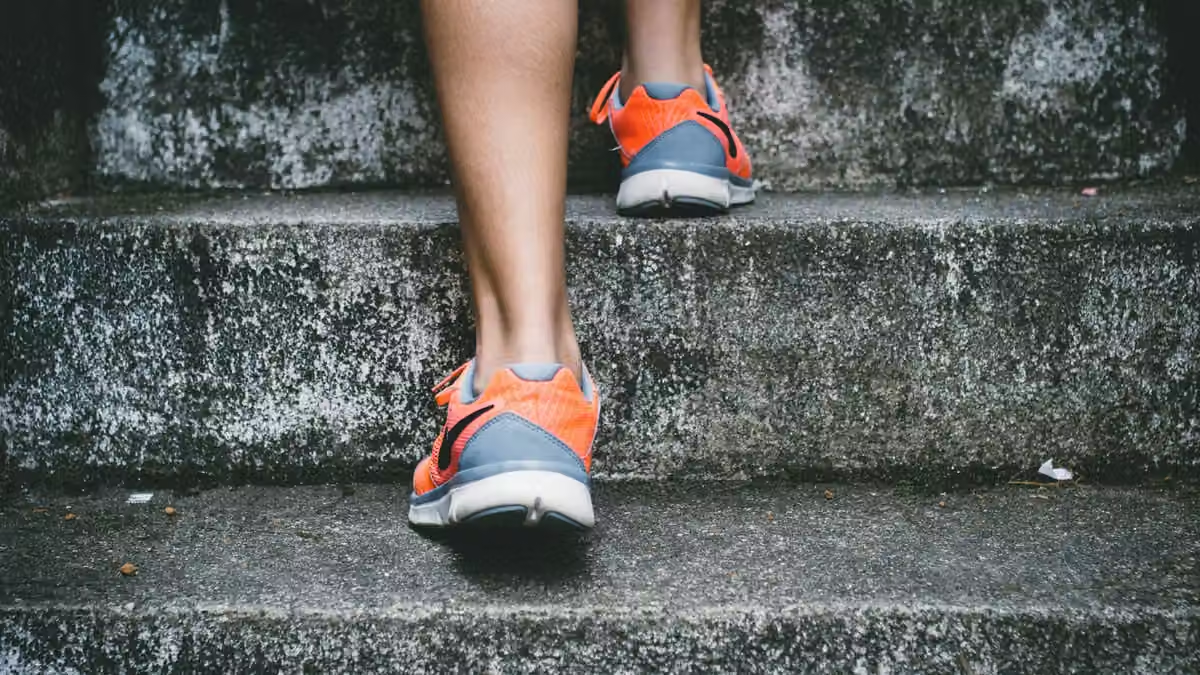
A daily step goal can make movement feel less vague. The question is not whether a person needs a perfect number. The useful question is what number helps a real life feel more active and less stuck in a chair.
The old 10,000-step idea gets repeated so often that it can sound official. It is neat. It is simple. It also turns out not to be a magic line in the sand. Research and health reporting have pointed to benefits well below that number, with 7,500 steps often showing up as a strong marker for lower mortality risk, especially in older adults.
That matters because many people hear “exercise” and think only of a workout. A brisk walk counts. So does a loop around the block, a few trips to the store, and an extra walk while the kettle heats. The body does not only care about gym time. It also notices what happens in the rest of the day.
Why 7,500 steps gets attention
The number 7,500 has drawn attention because it sits in a practical middle ground. It is high enough to encourage regular movement, but not so high that it feels like a dare from a fitness app with too much confidence. For many adults, it may be a more workable target than 10,000.
Step-count studies have found that risk tends to drop as daily steps rise, with the biggest gains often showing up in the lower and middle ranges. In plain terms, that means the move from very little walking to a moderate amount may matter a lot. After a certain point, the curve tends to flatten. More steps can still help, but the jump is not as dramatic.
That is one reason 7,500 steps is worth noticing. It gives a clear goal without pretending everyone needs to chase the same finish line. A person who starts at 3,000 steps is in a very different place from someone who already averages 8,000. The useful number is the one that helps movement fit into the day.
Sitting less counts too
A lot of people do one workout and then sit for hours. That is common. It is also part of the problem. Long stretches of sitting have been linked with higher risk of disease and early death, even when someone also does a short exercise session.
This is where step goals help. They break up the day. They pull movement out of the gym and put it back into ordinary life. That may look dull on paper. It is not glamorous. But there is something sturdy about ordinary motion. The knees, hips, heart, and mind tend to notice it.
A step goal also gives shape to the day. Without one, movement can drift. With one, a person has a clear reason to take the long way to the mailbox or pace while talking on the phone. That is not a grand fitness plan. It is life with a little less sitting.
Start with what is real
The most sensible place to begin is current activity. Wear a step counter or a pedometer for a week and see the usual number. That gives a baseline. It is harder to build a goal on guesswork than on actual steps.
A small increase works better than a big leap. A jump of 5 to 10 percent over several weeks is easier to live with than a dramatic overhaul. If the new number starts to feel comfortable, it can rise again later. That slow climb is boring in the best way. Boring is often what lasts.
A pedometer can be enough for this. A fancy tracker is fine too, but not required. The point is not collecting colorful data for its own sake. The point is noticing how much movement is already happening and where a little more might fit.
A small example makes it clearer
Say someone averages 5,000 steps a day. A 10 percent increase would bring that to 5,500. That may sound modest. It is. It is also real. A few extra hallway trips, a walk after lunch, and a short loop around the block can get there.
From there, the goal does not have to stop. Another small increase can happen later if it feels easy enough. This is how a number like 7,500 becomes less like a rule and more like a reachable place on a path.
That is the nice part of step goals. They can be adjusted. They do not have to be all or nothing. A person is not a failure at movement because one day comes in low. Life has errands, weather, sore feet, and the occasional chair that seems to have a gravitational pull.
Gym time still leaves room for this
A structured workout is good for the body. That part is widely understood. But it does not erase the rest of the day. Someone can do a solid workout and still spend too much time sitting before and after it.
That is why step counts help as a second layer. They are less about performance and more about total movement. A body likes both. It likes a walk that gets the heart going. It also likes all the little bits in between.
This is one reason 7,500 steps can feel so practical. It works with real life. It leaves room for work, chores, bad weather, and all the other ordinary things that do not care much about exercise slogans. There is no need to turn the day into a training camp.
What this number can do for a reader
A person can now use 7,500 steps as a plain, flexible target instead of a magical promise. The number gives shape to the day. It also helps explain why short bursts of movement matter, even when a full workout is not happening.
That is the real lesson here. Longevity talk can get grand and foggy. A step goal is simpler. It is one way to spend less of the day sitting still and more of it moving through normal life.
And that is the kind of practical habit that fits The Steady Table, where one practical food idea and one small habit can make the week feel more manageable.