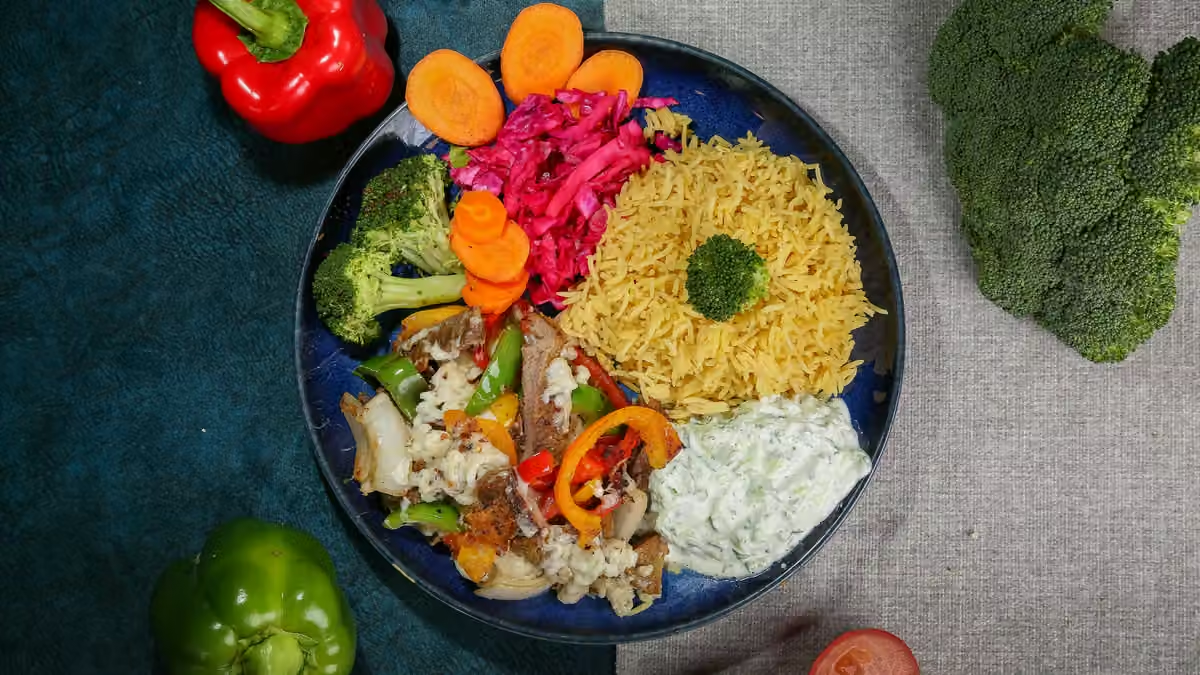
I keep coming back to this simple plate idea because it makes dinner feel less fussy: half vegetables, a quarter protein, and a quarter whole grains. It is plain enough to remember, which is half the battle on a busy day.
The part I like most is the shape of it. Vegetables take up the most room. Protein fills one quarter. Whole grains fill the last quarter. That gives a meal a clear guide without turning the table into a math test.
The vegetables do most of the heavy lifting on the plate. They bring color, crunch, and size without asking for a grand production. Fresh, frozen, or cooked vegetables all fit the same basic idea, which is useful when the fridge looks less than inspiring.
Protein sits in the smaller section, and that makes sense. Chicken, fish, eggs, beans, lentils, tofu, and similar foods are common choices in this kind of meal pattern. The point is not to build a giant pile. It is to give that part of the plate a steady place.
The last quarter belongs to whole grains. Brown rice, oats, whole wheat pasta, quinoa, and other whole grain foods fit there. Whole grains are the version that keeps more of the grain intact, so they are different from refined grains like white bread or white rice.
What stands out to me is how ordinary this is. It is not a special diet with a complicated name. It is a way to look at a plate and see balance fast. That can help when a person wants structure, but not a lecture.
There is one honest limit, though. This plate is a general pattern, not a perfect rule for every meal or every person. A soup, sandwich, bowl, or salad may not look split into neat quarters and still be a reasonable meal. Food does not always line up like a classroom chart, and that is fine.
Another small point matters here too. The plate idea is a guide for the meal, not a promise about health on its own. A balanced plate can still be part of a larger food pattern that depends on taste, budget, appetite, culture, and what is actually in the kitchen. No single plate solves all of that. It just makes the next meal easier to picture.
I also think the whole grains part gets a little too much confusion in day-to-day talk. People hear “grains” and think only of bread or pasta, but whole grains can show up in many forms. The useful part is that the grain side of the plate leans whole when possible, instead of letting refined grains take over by default.
The nice thing about this meal shape is how quiet it is. It does not ask for a new personality. It just gives a meal a simple outline. Half vegetables, quarter protein, quarter whole grains. That is enough to start.
For me, that is the kind of food idea that earns its keep. It helps with ordinary meals, and it leaves room for real life. Some days the plate will be tidy. Some days it will be lopsided. The point is the pattern, not the parade.
The Steady Table would likely nod at that kind of simple plan. One practical food idea and one small habit to make the week feel more manageable can go a long way, especially when dinner needs to be calm instead of clever.
More on: Healthy Eating