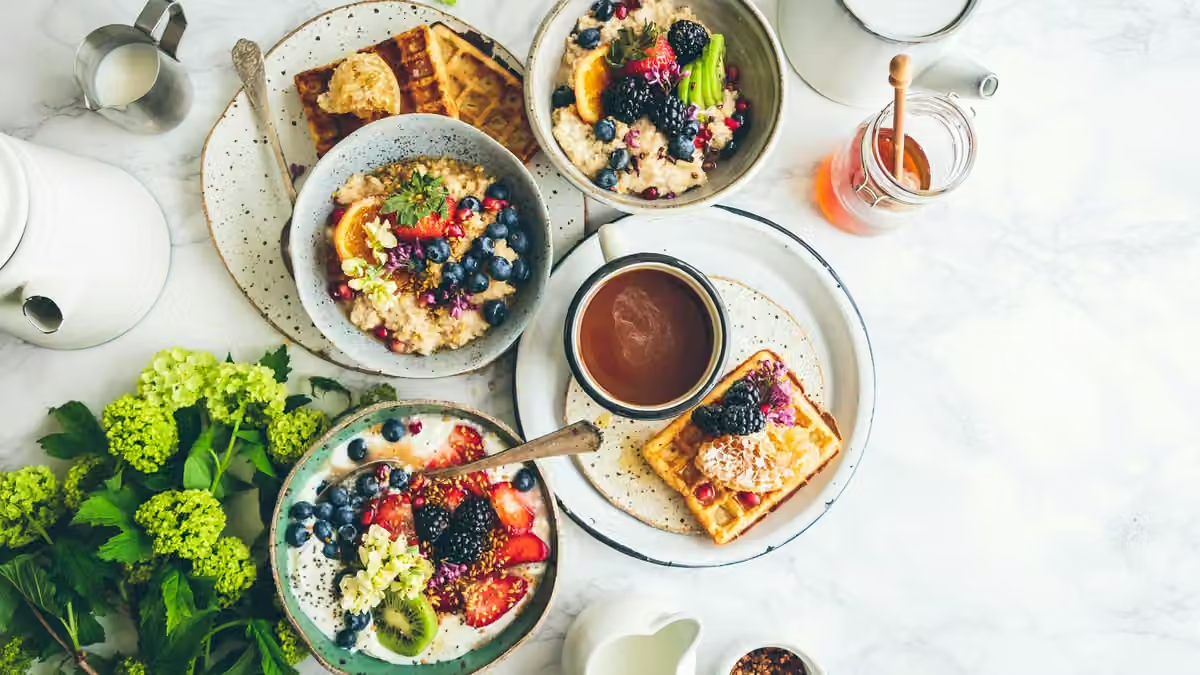
Eating a rainbow of fruits and vegetables boosts health. That is the plain answer, and it is easy to see why the idea has stayed around. Different colors often point to different plant compounds, vitamins, minerals, and fiber. That mix gives the body more than one kind of support, which is part of the appeal.
I like that this idea stays close to ordinary life. It does not ask for a perfect plan or a fancy rulebook. It just says that a plate with more color often brings more variety, and variety is one of the quiet strengths of healthy eating.
Red foods like tomatoes, strawberries, and red peppers often bring plant compounds such as lycopene and anthocyanins. Orange and yellow foods often bring carotenoids, which are linked with vitamin A activity and support for vision and immune function. Green foods often bring folate, vitamin K, potassium, and fiber. Purple and blue foods often bring anthocyanins, another group of plant compounds that help give fruits and vegetables their color.
That is the useful part of the rainbow idea. The colors are not decoration. They are clues. A basket with red, green, orange, purple, and white foods is more likely to give a wider spread of nutrients than a basket with only one or two colors. Plain food can be practical food, and that is not a bad thing.
I also think the fiber part deserves a little respect. Fruits and vegetables do not just add color. They add bulk, texture, and a sense of fullness that many people find helpful at the table. Fiber also supports normal digestion. No drama there. Just basic, steady usefulness.
Still, I do not like overselling it. Eating a rainbow is not a magic fix. It does not cancel out the rest of the meal, and it does not turn every food choice into a health win. A colorful plate can still be too large, too salty, or too sugary, depending on what else is on it. The colors help, but they do not do all the work.
There is also a limit in the evidence. Scientists know that fruits and vegetables are linked with better health overall, and they know that different colors often bring different helpful plant compounds. But the exact effect of each color on long-term health is harder to pin down. Foods are usually eaten together, not one color at a time in a clean lab line. Real meals are messy. That is one reason nutrition science can sound certain in one sentence and careful in the next.
I think that honesty matters. It is fair to say that eating a range of fruits and vegetables is a good habit for general health. It is also fair to say that no single color, and no single food, carries the whole burden. The body does not run on slogans. It runs on a lot of small things repeated over time.
The practical part is simple enough. More color usually means more kinds of plant compounds. More kinds of plant compounds usually means more chances to cover different needs. That is the whole promise of the rainbow idea, and it is a modest one. Modest is fine. Modest is often where good habits live.
I also like that the idea can fit real life. Frozen vegetables count. Canned fruits and vegetables can count too, if they fit the rest of the meal and do not come with a lot of extra sugar or salt. The point is not to build a perfect rainbow every day. The point is to make the plate less samey when that is possible.
That is where healthy eating gets easier for me to think about. A bowl of greens, some orange carrots, a red tomato, and a handful of berries already looks more varied than a plate that leans on one note. It does not have to be fancy. It just has to be a little less stuck.
So yes, the headline holds up. Eating a rainbow of fruits and vegetables can boost health because it brings a wider mix of nutrients and plant compounds, along with fiber. The honest limit is that this is broad nutrition advice, not a guarantee, and the size of the benefit depends on the rest of the diet and the person eating it.
The Steady Table keeps that spirit in mind with one practical food idea and one small habit to make the week feel more manageable. That sounds like the right scale for this kind of eating.